Image-to-Video: How to Compare Models by Bottleneck (Minimax vs Veo vs Others)
Instead of ranking by hype, compare image-to-video models by the bottleneck you need: geometry truth, texture fidelity, and label readability.
Read more →
Instead of ranking by hype, compare image-to-video models by the bottleneck you need: geometry truth, texture fidelity, and label readability.
Read more →
Image-to-video production is direction-driven. Use gates to preserve product truth, keep identity stable, and export channel-safe variants.
Read more →
Text-to-video in production is not “prompt → video”. It is direction → gates → export variants with product-truth QA.
Read more →
A decision guide: route by bottleneck after your creative direction and QA gates are locked—so your model choice is predictable.
Read more →
Canva + ChatGPT can make assets. Orauria can connect the workflow: brief → kit → QA gates → generation → publish-ready exports.
Read more →
A real case study: how a small 30-SKU shop planned roles, generated scenes, ran QA gates, and shipped a complete lookbook fast without studio reshoots.
Read more →
Orauria is an end-to-end creative production workspace: brief, brand kit, generation, QA gates, and publishing-ready exports for ecommerce and marketing teams.
Read more →
Raw prompts are flexible. Normalizers are structured. Learn when each one works in AI ecommerce production—so you stop wasting runs.
Read more →
AI can make everything look good. The trap is assuming visual consistency happens automatically. It needs rules, gates, and a world kit.
Read more →
Stop ranking models. Rank your bottlenecks instead: geometry, texture, and label clarity. Here is a real comparison design.
Read more →
Not every product belongs in a white studio scene. This framework helps you choose world truth: when to use “studio-like” visuals and when lifestyle wins.
Read more →
When you remove the studio, your real risk is not quality. It is identity drift. Here is the opportunity map and the QC gates.
Read more →
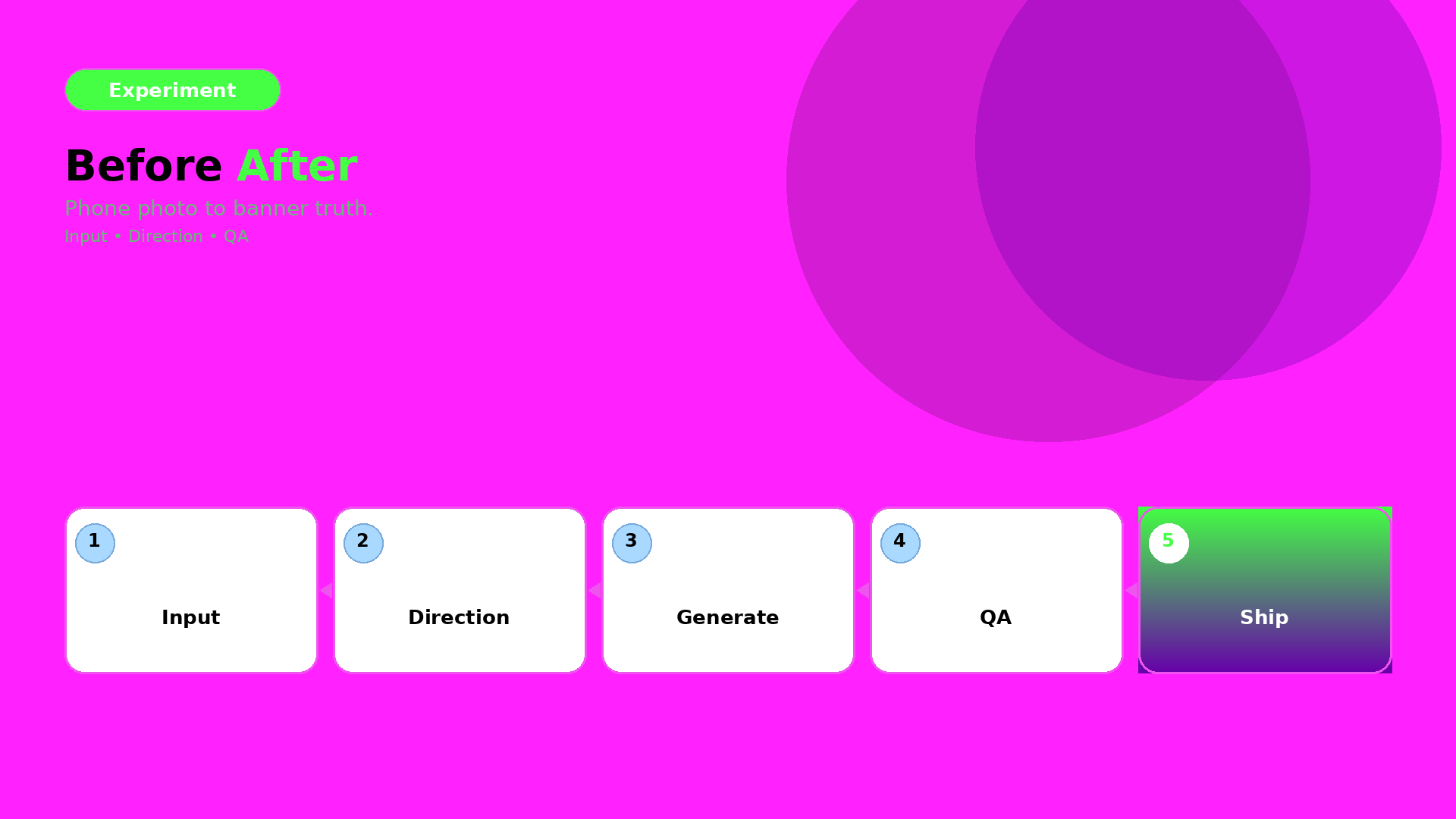
A real before/after workflow: phone photo input → direction kit → AI generation → QA gates → export banner-ready results.
Read more →
A lookbook is a narrative system. World-building is how AI scenes stay coherent: continuity rules, scene roles, and an offer that repeats safely.
Read more →
A lookbook is not a pile of images. It is a set of creative directions that keep brand continuity across scenes, formats, and drops.
Read more →
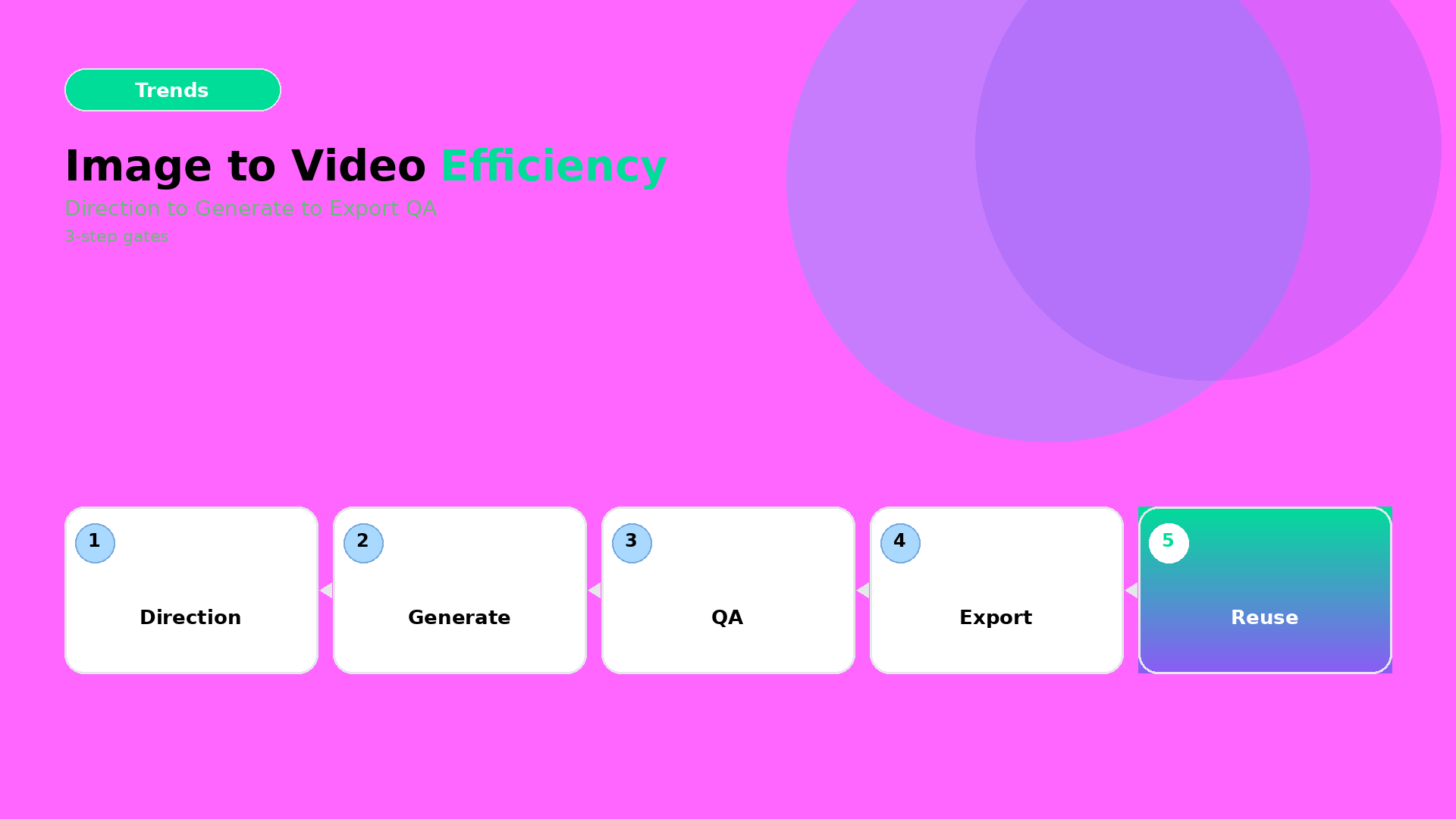
Turn images into ad-ready video clips using a 3-step workflow with gates: direction → generation → crop/resize QA. Designed for speed without losing product truth.
Read more →
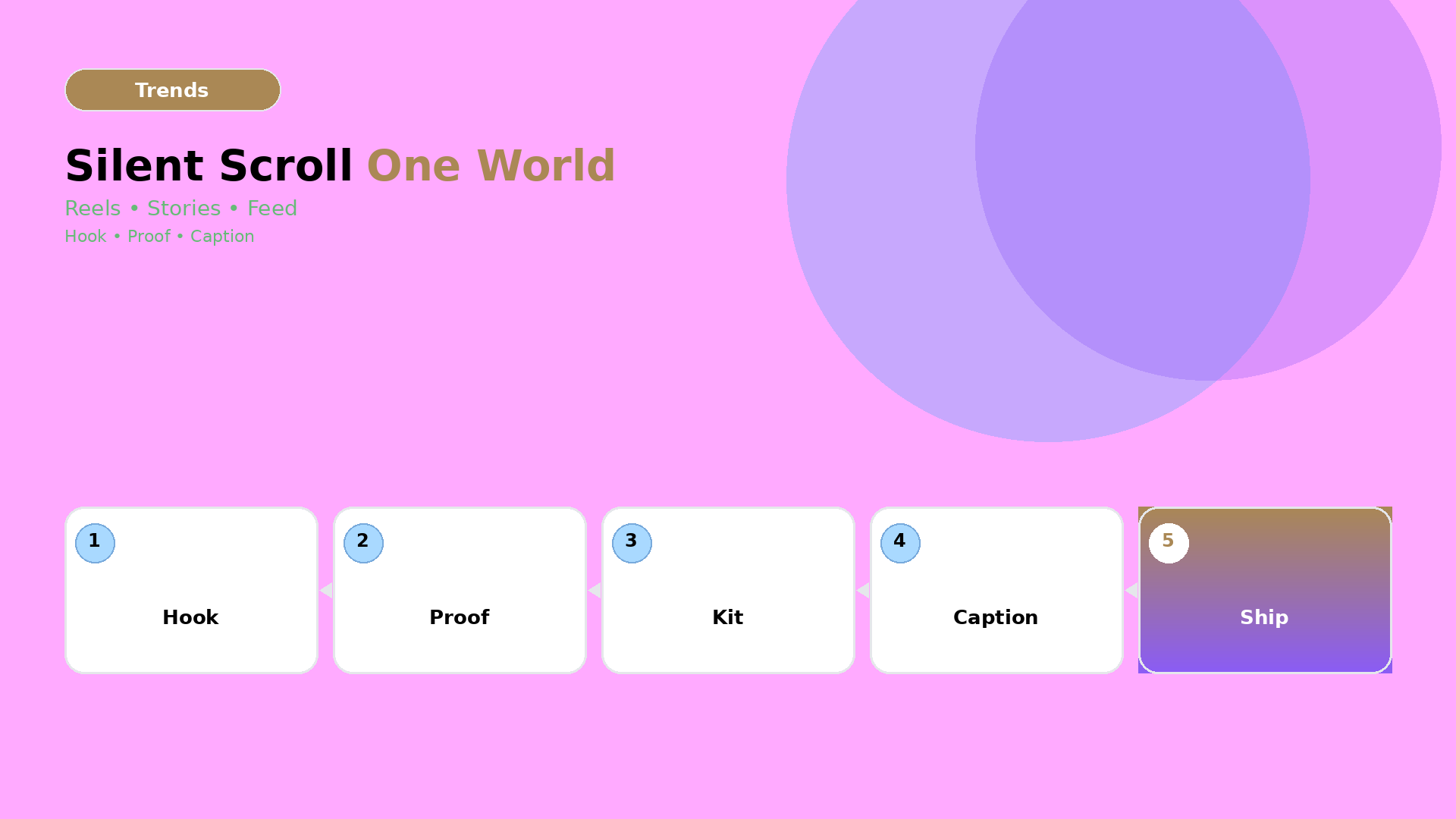
Make Instagram ads that work even with sound off. Use a single creative world kit for hooks, scenes, and captions across reels, stories, and feed.
Read more →
Stop prompt roulette. Use a brief-to-caption workflow with gates so your marketing copy stays consistent across ads, reels, and product pages.
Read more →
AI does not make campaigns agile by itself. Agile creative needs smaller bets, locked kits, daily gates, and slot maps — compressing a month of ecommerce visuals into a disciplined week.
Read more →
Freelance AI work stalls when you invoice PNGs only. Deliver a creative system — brief template, brand kit slot, node graph, and gate checklist — so clients stop restarting every Monday.
Read more →