A model book is not a client list. Bookers and brand teams look first at whether they can see you: a clean headshot, a full-length, a three-quarter, a second look, all of the same person, lit and styled with some discipline. Campaign credits help later. They are not what you need to start.
If you do not yet have brand bookings, the useful work is a first profile: a tight shot list, test-shoot concepts you actually intend to make, and a face that stays the same from frame to frame. This playbook uses one trending Pinterest pin as a lighting and composition teacher, then builds an original test-shoot still — and a small set of matching book shots — in Orauria Studio. It is a workflow, not a placement report. We are not going to invent a booking we do not have.
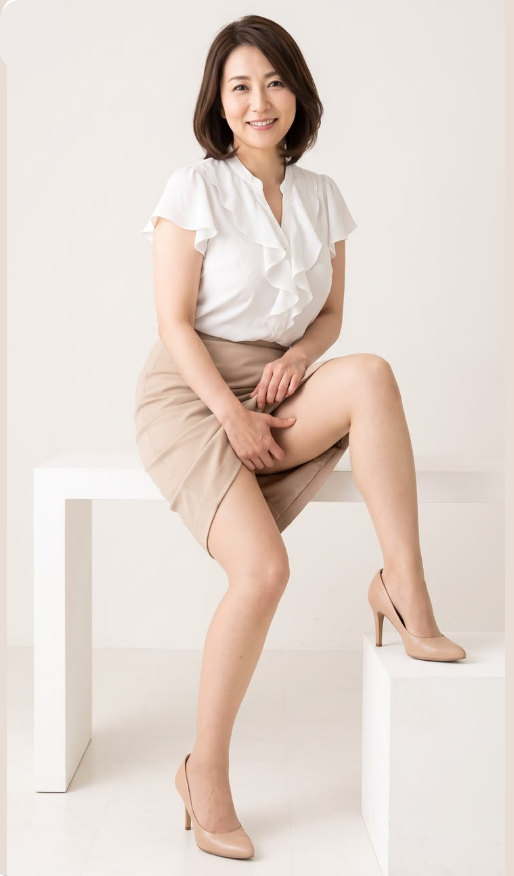
The reference is this pin by ifAIwere: a vertical full-length studio portrait of an East Asian woman with a chin-length bob, a white ruffled blouse, a beige skirt, and nude heels, seated sideways on a simple white bench in a warm off-white room. It is a clean hero frame for a comp card. It is also someone else’s face and someone else’s look. The woman in the still we generated is a different person, on purpose, in a different outfit, in the same kind of studio.
The playbook at a glance
- Install the Chrome extension.
- Find a pin that is really a test-shoot frame — full-length or three-quarter, simple light, generous negative space — not a face to clone.
- Run Image to prompt and copy the brief.
- Rewrite the character. Restyle the look. Keep the studio, the pose, and the crop.
- Generate the hero still in Studio, then fill the rest of a first book with the same person: a headshot, a serious close-up, a standing full-length, a simple commercial look.
- Put a short, consistent profile in front of brands. Pitch with the book you actually have.
First, install the extension
Image to prompt only works after you install the Chrome extension AI Assistant Copilot – Orauria. Get it from the Chrome Web Store before you go looking for a reference. Once it is on, you can right-click a pin and pull a prompt from it.
Find a test-shoot frame, not a face to copy
A first book rewards simple pictures. Bookers are trying to read proportion, posture, and a face, not a location they cannot rebook. This pin already thinks that way: a vertical full-length, almost eye-level, bright diffuse studio light, a pale room, a white bench and a low block, and enough negative space that the frame would still hold on a comp card. Those are the useful parts.
The original face should not travel into the book, and neither should the exact outfit if you want the test to be yours. Treat the pin as a lighting and posing reference. Credit the person who posted it — here, ifAIwere — and then write a different character.
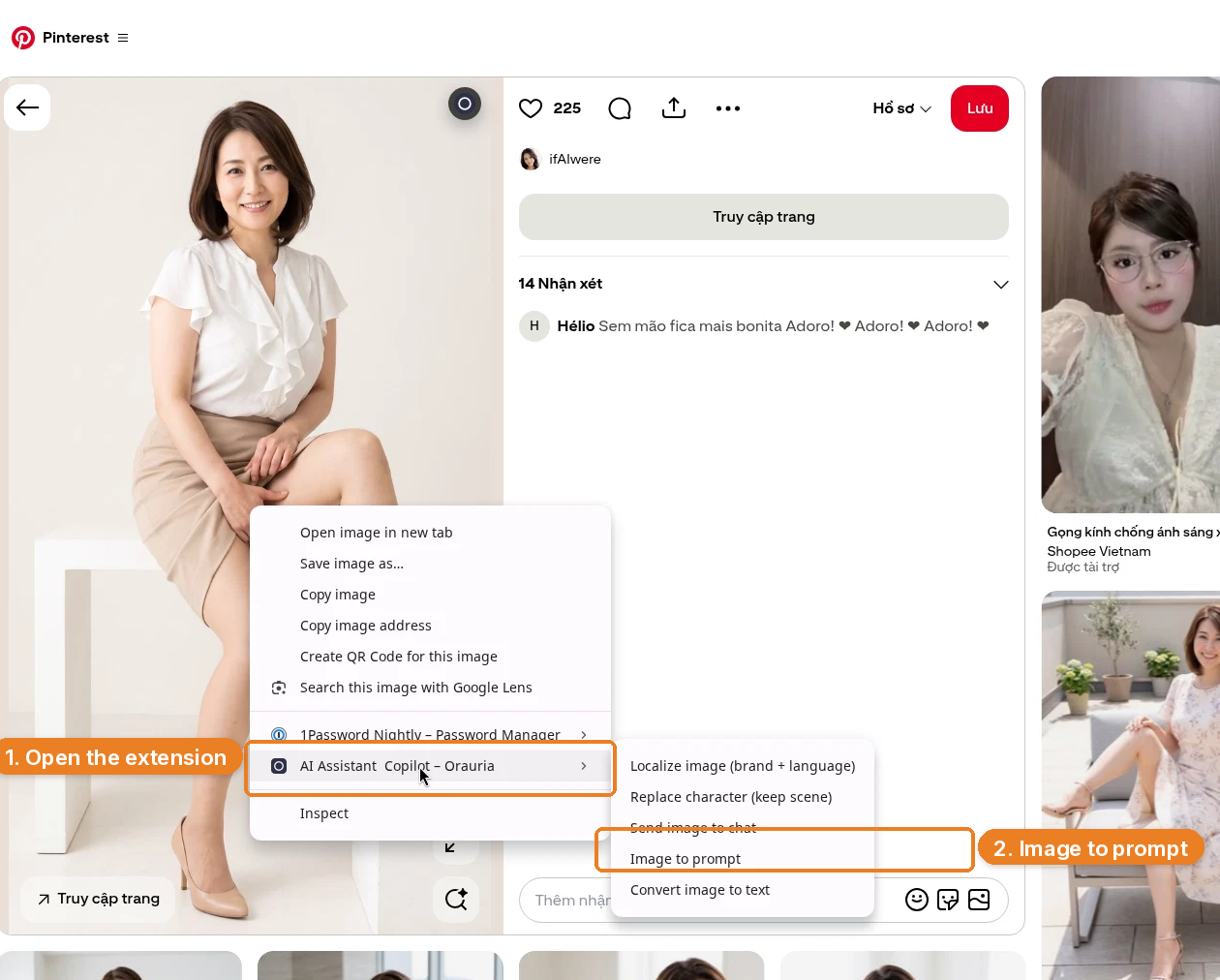
Right-click the image, open AI Assistant Copilot – Orauria, and choose Image to prompt.
The panel analyzes the picture, then returns a prompt you can copy.
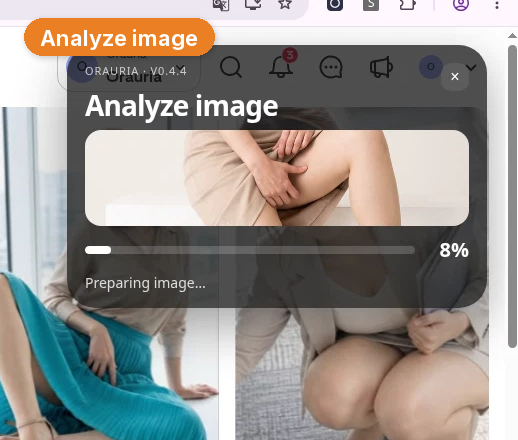
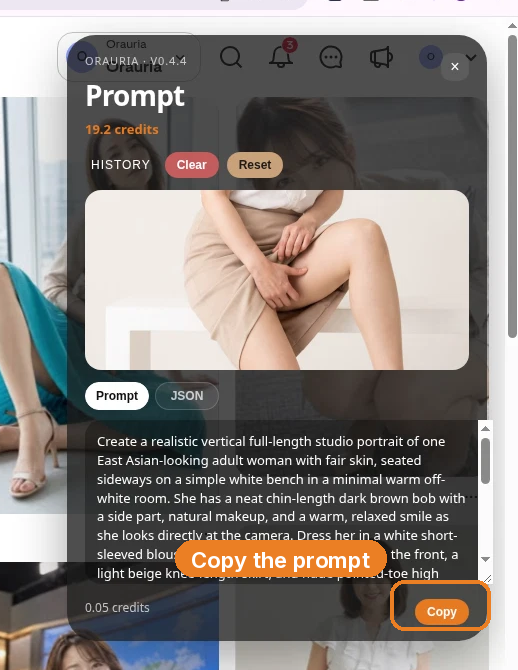
This is the brief the extension wrote from the pin, quoted in full:
Create a realistic vertical full-length studio portrait of one East Asian-looking adult woman with fair skin, seated sideways on a simple white bench in a minimal warm off-white room. She has a neat chin-length dark brown bob with a side part, natural makeup, and a warm, relaxed smile as she looks directly at the camera. Dress her in a white short-sleeved blouse with soft cascading ruffles down the front, a light beige knee-length skirt, and nude pointed-toe high heels. Her shoulders are relaxed; her hands rest gently over her legs, one knee lifted and bent toward a low white rectangular block on the right, the other leg extending down toward the floor. Keep her figure centered slightly left, with the bench visible behind her and the block supporting the raised heel; include both shoes and leave generous pale negative space around her. Use a nearly eye-level camera, straightforward perspective, bright diffuse frontal studio light, low contrast, soft shadows, even skin tones, natural proportions, crisp but gentle photographic detail, and a restrained palette of warm white, beige, and dark brown. No visible text or decorative props.
The useful part is the studio: the warm off-white room, the white bench and the low rectangular block, the almost eye-level camera, the bright diffuse frontal light, the low contrast, the pale negative space, the vertical full-length crop. The part you owe the rewrite is the person — and, for a first test look, the clothes.
Change the face, then restyle the test look
A portfolio is easy to get wrong in both directions. If you keep the pin’s face, you do not have a book; you have a reprint. If you keep every stitch of the outfit and only tweak a hairstyle, you are still too close. So we changed both.
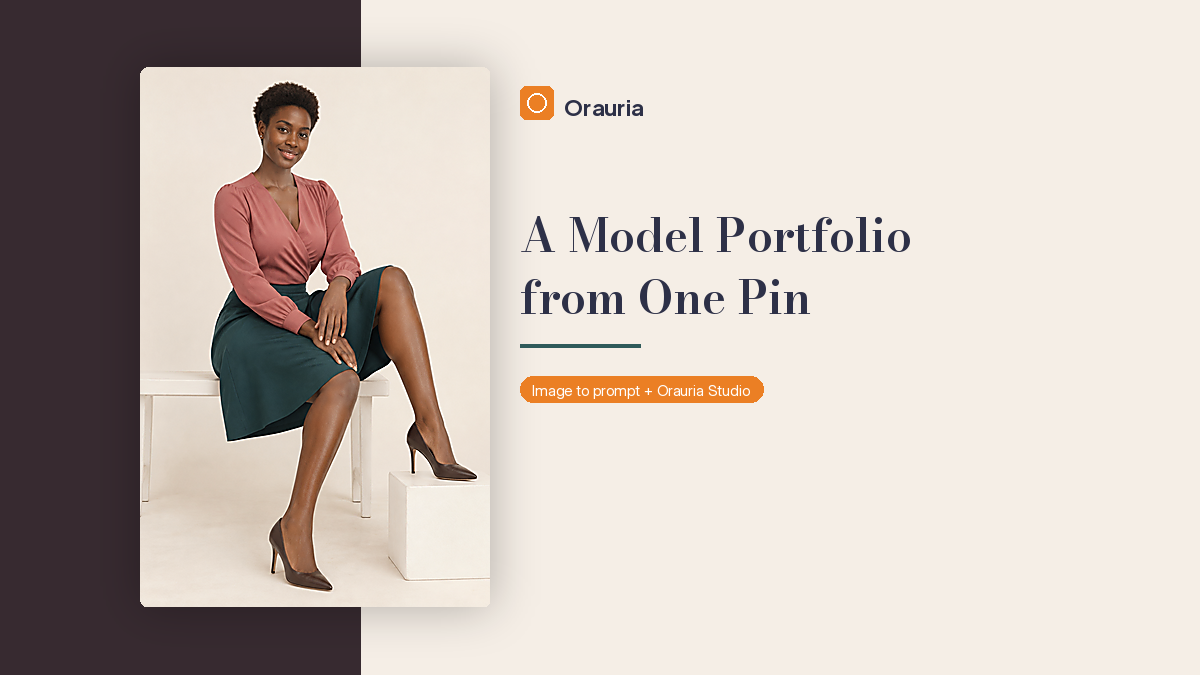
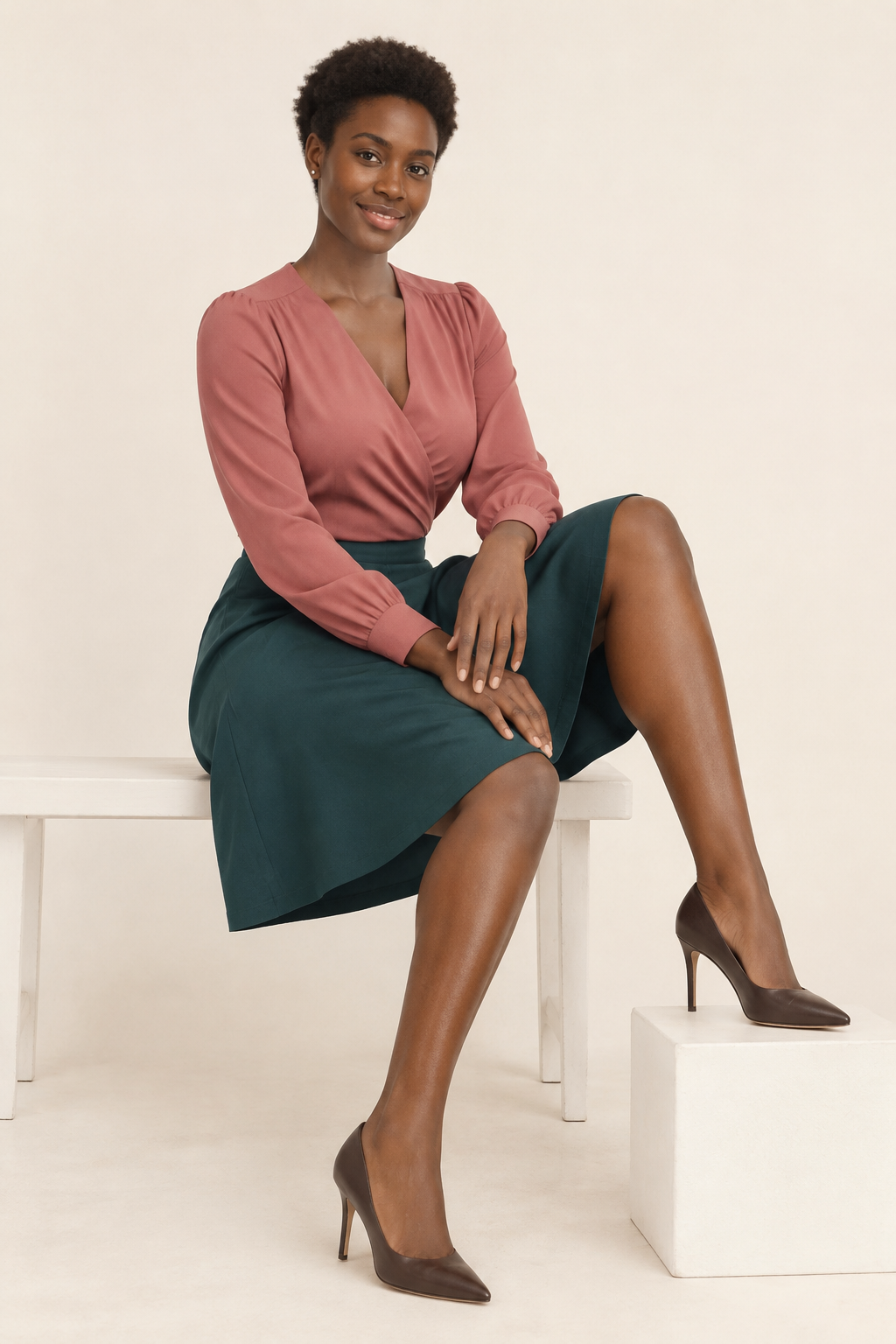
The new character is a fictional adult Black woman with deep espresso-brown skin, a softly angular oval face, dark brown eyes, and short natural tightly coiled hair in a cropped tapered shape. She is not the woman in the pin. The chin-length bob, the fair skin, and the original features stay with the pin.
Then we restyled the test look, the way you would if you were planning an original sitting in this same studio: a dusty-rose long-sleeved wrap blouse, a deep teal knee-length A-line skirt, and dark chocolate pointed-toe heels. The white ruffles, the beige skirt, and the nude heels stay with the pin too. The pose is the one worth keeping — seated sideways, one knee lifted onto the block, hands easy over the legs, a calm smile into the lens — because that is the composition the pin taught, not the identity of the sitter.
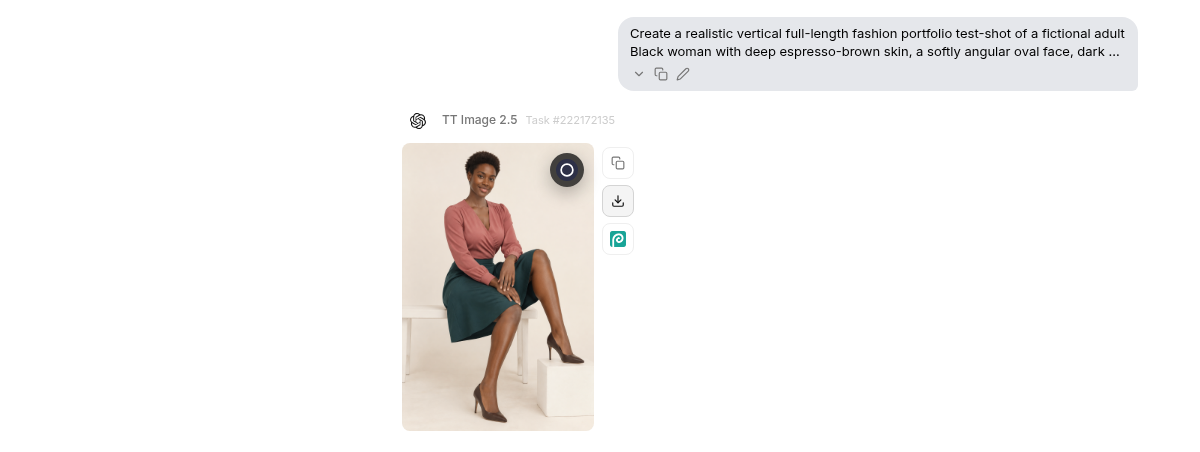
Create a realistic vertical full-length fashion portfolio test-shot of a fictional adult Black woman with deep espresso-brown skin, a softly angular oval face, dark brown eyes, and short natural tightly coiled hair in a cropped tapered shape. She is seated sideways on a simple white bench in a minimal warm off-white studio, facing the camera with a calm, easy smile. Keep the same relaxed editorial pose: her shoulders rest naturally, her hands lie gently over her legs, one knee is lifted and bent toward a low white rectangular block on the right, and the other leg extends down toward the floor. Dress her in a dusty-rose long-sleeved wrap blouse with soft gathered details, a deep teal knee-length A-line skirt, and dark chocolate pointed-toe high heels. Keep her figure centered slightly left, with the bench visible behind her and the block supporting the raised heel; show both shoes and leave generous pale negative space around her. Use a nearly eye-level camera and straightforward perspective, bright diffuse frontal studio light, low contrast, soft shadows, even skin tones, natural proportions, and crisp but gentle photographic detail. Restrained warm-white, dusty-rose, deep-teal, and dark-brown palette. An authentic, polished test shoot for an emerging model’s personal portfolio; fictional subject, no visible text, logos, or decorative props.
That is the ethical move, and it is also the practical one. A booker who has already seen the original pin should not meet the same face again with your name under it. They should meet a consistent person who can show up in a headshot and a full-length and still be recognizable.
Generate the hero still in Studio
Open Orauria Studio:
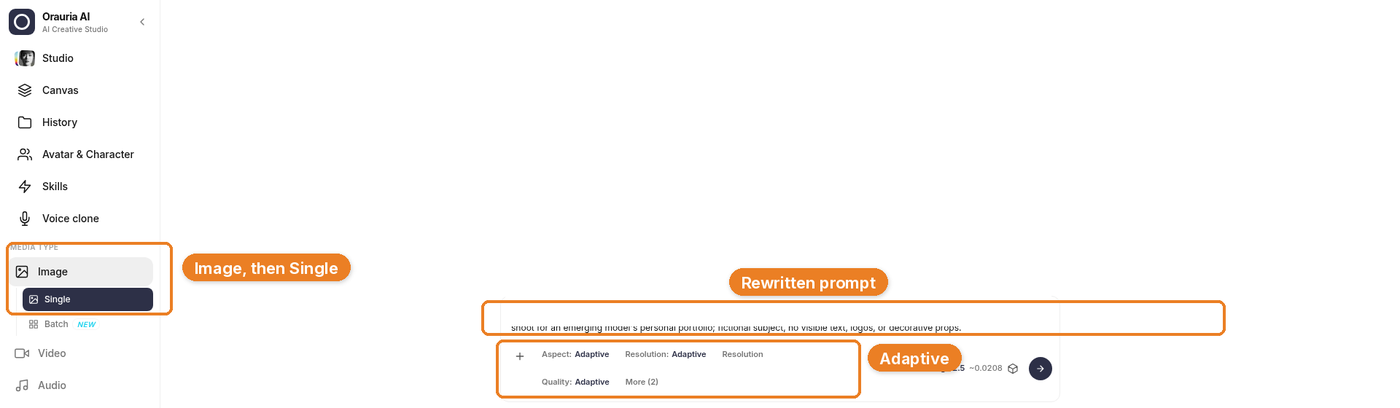
- Image, then Single
- Aspect ratio, Resolution, and Quality: Adaptive
- Model: TT Image 2.5
- Generate with the send button, or Ctrl+Enter
Paste the rewritten prompt. The vertical full-length is already in the brief; with Adaptive on, the model can pick up that framing.
This job is TT Image 2.5, task #222172135. The still that came back kept the pale room, the bench, the block, the lifted knee, the soft frontal light, and the generous negative space. The woman is not the woman in the pin, and the outfit is not the pin’s outfit.
What belongs on a first comp card
A classic comp card is a short, portable book: one strong headshot on the front, two to four more images on the back, plus the facts a booker actually needs — height, measurements, hair, eyes, and a way to reach you. You do not need twelve locations and a fog machine. You need a set of pictures in which the same person is easy to read.
A practical first shot list, whether you will later shoot it with a photographer or storyboard it like this, usually includes:
- A clean beauty headshot, smiling, cropped at the upper chest
- A serious or editorial close-up, no smile, so the face can be read two ways
- A three-quarter or waist-up
- A full-length standing, simple posture, shoes in the frame
- One second look that is more commercial than editorial — jeans and a tank, not another gown
Keep the lighting family consistent. If the hero is a bright, low-contrast studio, do not follow it with a neon street and a wind machine. The point of a first book is recognition. Hair, makeup, and skin should feel like the same sitting, or at least the same person a week later.
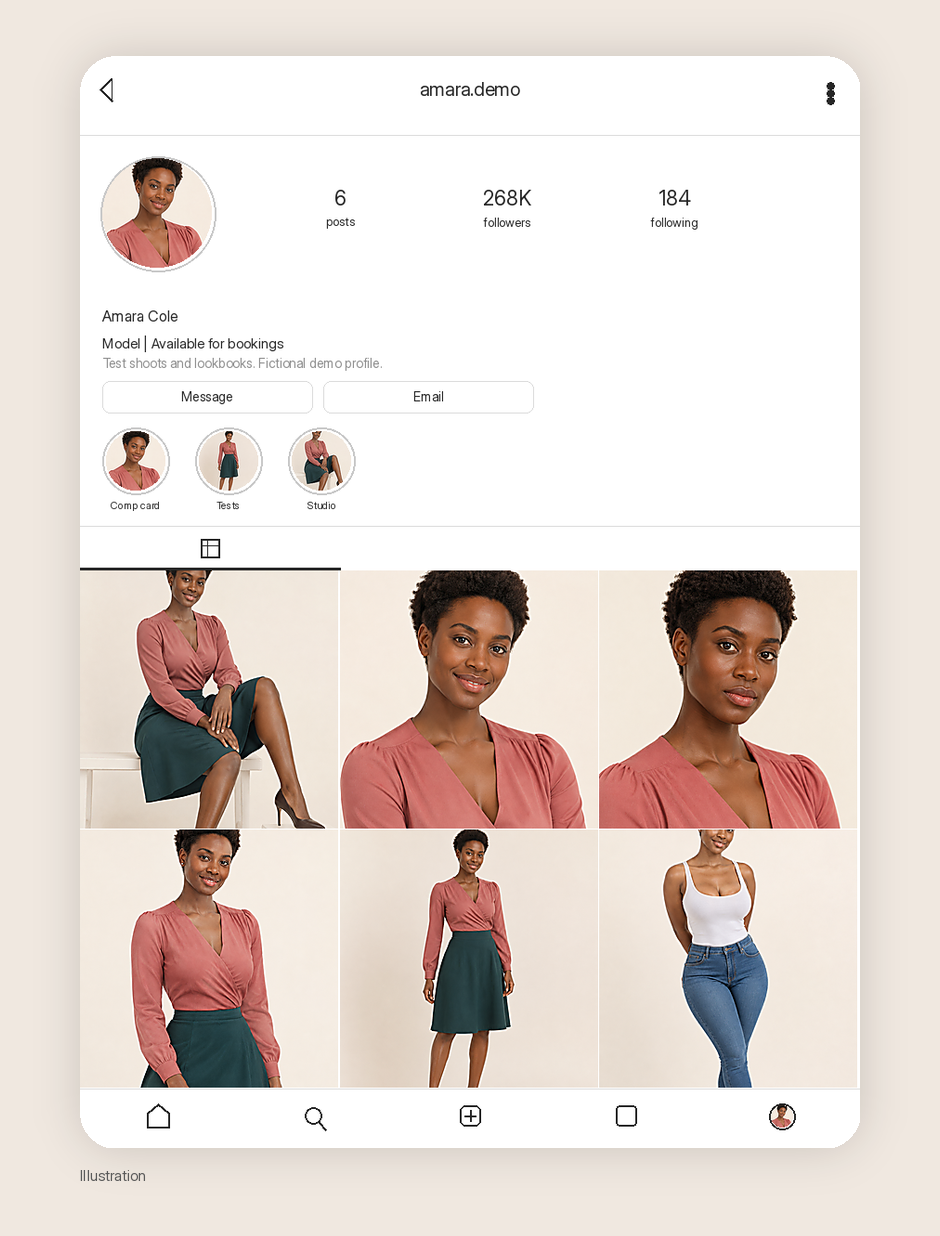
We used the hero still as a character reference and generated the rest of that list of the same woman: a smiling headshot, a serious close-up, a three-quarter, a standing full-length in the dusty-rose and teal look, and a cleaner commercial frame in a white tank and indigo jeans. Those frames are in the profile illustration below. They are test-shoot stills of a fictional character, not photographs from a booked campaign.
Build test-shoot concepts from trending pins
This is the habit to keep, even after you have a photographer. When a pin has the crop, the light, or the posture you want, run Image to prompt, keep the studio notes, and rewrite the person. Do that before you book the test, and you have a brief you can hand to a team. Do it in Studio, and you have a storyboard you can hold against the final selects.
A few rules keep the concepts honest:
- Steal light, crop, and pose. Do not steal a face, and do not reprint a look stitch for stitch.
- Prefer pins that already look like book frames: simple backgrounds, full-length or three-quarter, space around the figure.
- Write the character once, in enough detail that later prompts can match her. If the model supports a reference image, use the hero still so the face does not drift.
- One concept, one job. A seated studio hero, a standing full-length, and a commercial look are three briefs, not one prompt with a wish list.
The pin by ifAIwere was a good teacher because it was already a test-shoot picture. A cluttered lifestyle crop would have taught the wrong lesson for a first card.
Keep the look consistent, then put it on a profile
A profile is just the book, held still long enough for someone to scroll it. The handle, the bio, and the grid should agree with each other. “Model | Available for bookings” is enough of a bio when that is the actual ask. The grid should be the same person in the same lighting family, not a moodboard of other people’s jobs.
The mockup below is an illustration of how that profile might look, built from the stills we actually generated of this character. The handle amara.demo, the name, the follower counts, and the engagement are fictional. They are not a channel we run and not a result this workflow produced. The small Illustration label is there for the same reason.
If you are a real person building a real book, the same grid logic applies, with photographs you actually sat for. Use Image to prompt to plan the sitting. Do not swap a generated face for yours and send it to an agency as a photograph of you.
How to pitch brands when the book is short
A short, consistent book is easier to send than a folder of forty mixed looks. Lead with three to five frames that belong together, a simple comp card or a tight PDF, and a short note that says who you are, what you shoot, and why you are writing to this brand. Specific is kinder than flattered: a product you actually wear, a campaign whose lighting you can match, a date you are free for a test.
Do not pad the email with bookings you do not have. “Available for tests and lookbooks” is a clear sentence. An invented campaign credit is a fast way to end the conversation. If all you have are tests, say they are tests. The work in the frames will do more than a list of names.
One more practical point: the same face has to survive the jump from a hero still to a headshot to a commercial look. If the person in the jeans frame does not look like the person on the bench, you do not have a book yet. You have a moodboard. That is why the rewrite happens once, up front, and every later prompt or sitting refers back to it.
What this playbook is not
It is not a placement report. We are not going to borrow the pin’s like count, or invent a booking, a rate, or a follower number for a profile we have not published. The mockup’s engagement is an illustration, labeled as one. It is not a shortcut around the face rewrite. If the woman on the white bench is still the woman from the pin, you do not have a portfolio yet. You have a reprint with better margins. And it is not a substitute for a real sitting if you are pitching yourself as a photographable person — in that case, this is a way to plan the test, not a way to skip it.
Start here
Install AI Assistant Copilot – Orauria from the Chrome Web Store, find a pin that is really a test-shoot frame, and write a person who can come back in a headshot and a full-length. Generate the hero still in Studio. Then build the rest of the card from that same face, not from the original portrait.
Start here: orauria.com, and the Chrome Web Store listing for AI Assistant Copilot – Orauria.