Most teams treat “prompting” as one skill. It isn’t.
For ecommerce production, prompting is actually two different jobs:
- turning a messy idea into a structured intent (normalizer),
- and pushing style choices inside a locked direction (raw creative prompt).
If you mix these jobs, you get inconsistent outputs and wasted iterations.
Key Takeaways
– Raw prompts are good for exploration.
– Normalizers are good for alignment and repeatability.
– Your workflow should choose the tool by bottleneck, not by preference.
What is a prompt normalizer (production view)?
A normalizer takes input like:
- “make it premium”,
- “use the same model”,
- “make it look like our brand”,
- “turn this into an ad”.
And converts it into a structured brief:
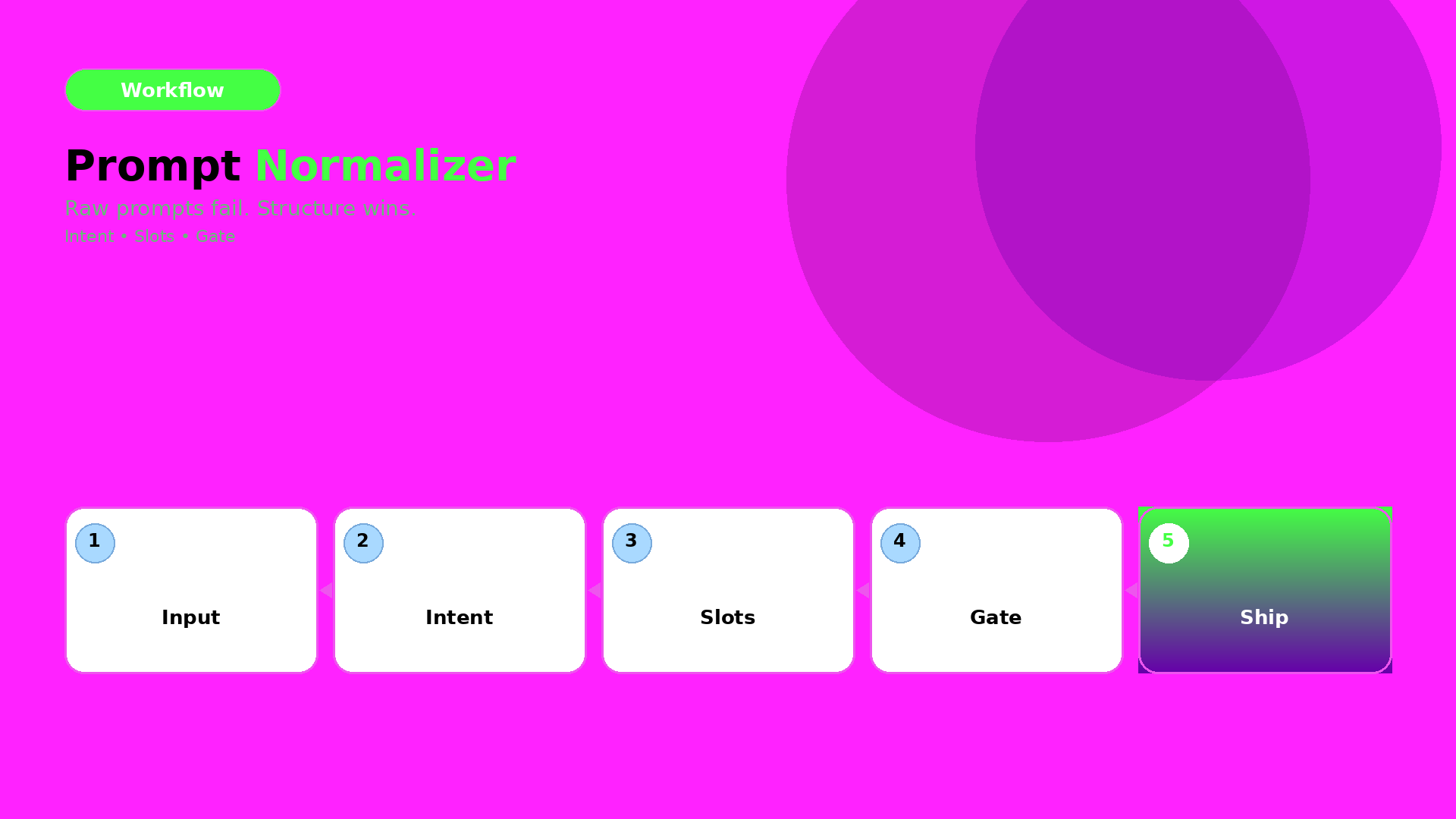
- Intent: what outcome it must achieve,
- Slots: what can vary vs what cannot,
- Constraints: QA gates rules (geometry, readability, world logic),
- Output routing: which model family fits the bottleneck.
In other words, it is the briefing layer.
What are raw creative prompts (exploration view)?
Raw prompts are where you:
- try a new visual twist,
- adjust scene tone,
- explore typography density,
- test hook variations.
Raw prompts are not wrong. They are just wrong for tasks that require alignment.
The decision guide: choose by bottleneck
Ask this:
A) Are you missing alignment?
If results drift in:
- face/identity,
- shadow family,
- label clarity,
- caption promise vs visuals,
then you are missing rules. Use a prompt normalizer.
B) Are you already aligned and just exploring?
If identity is stable and only style options are unclear, then exploration is fine. Use raw creative prompts.
A simple workflow that prevents waste
Use this loop:
- Normalize the brief (intent + slots + constraints)
- Generate exploration variants inside the locked world kit
- Gate by QA checks
- Ship only the winners into your content system
This is what “workflow mindset” means in prompting: you are building a reusable system, not repeating trials.
What to do next
If you want the brief template:
If you want workflow routing: