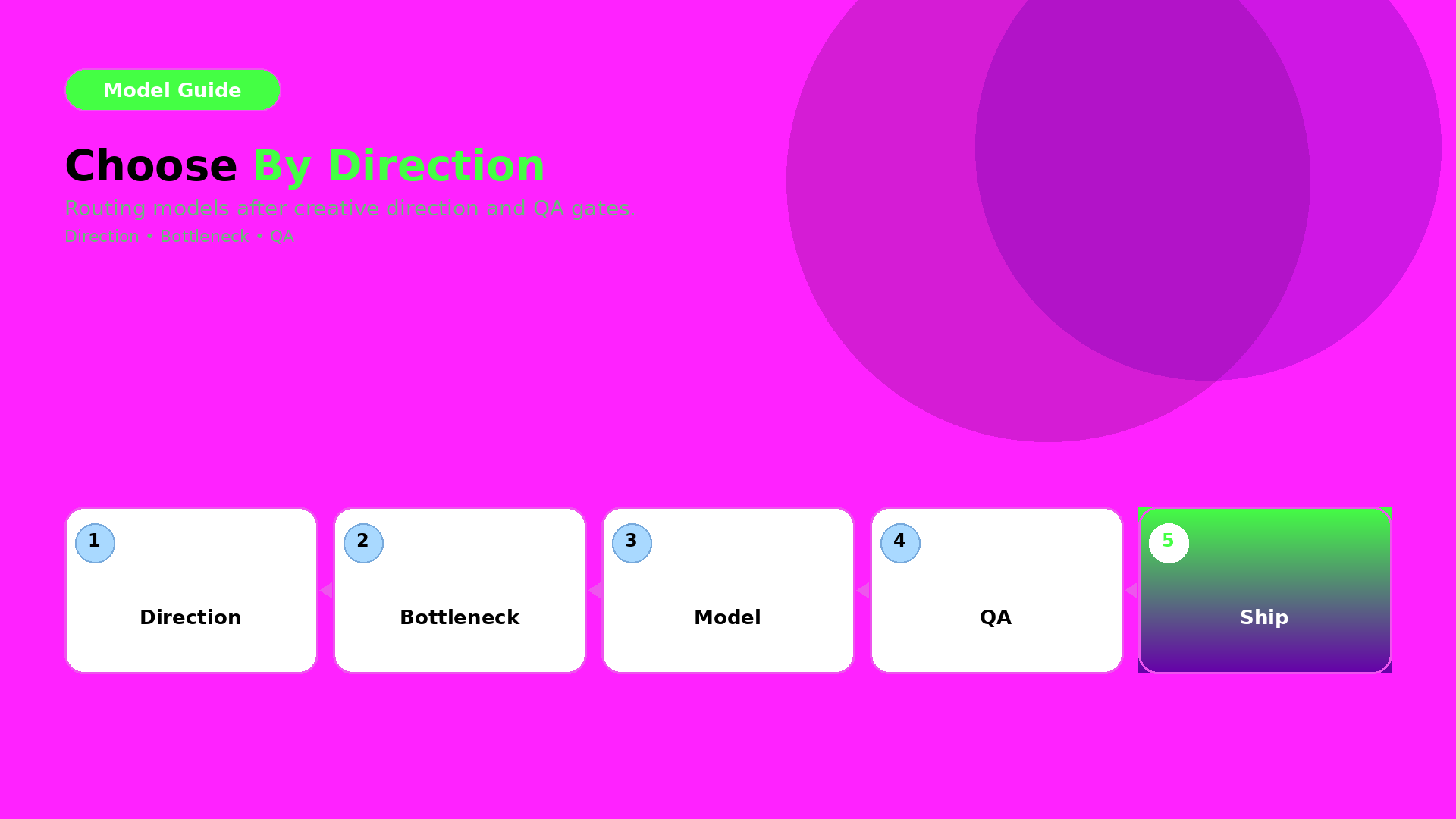
The most expensive question in ecommerce creative Slack is also the most premature: “Which model should we use — Nano Banana, GPT Image, or Seedream?” Teams debate price and aesthetics for an hour. Nobody has written the buyer question, the angle set, or the ratio family. Then every model “fails,” because the brief was never a brief.
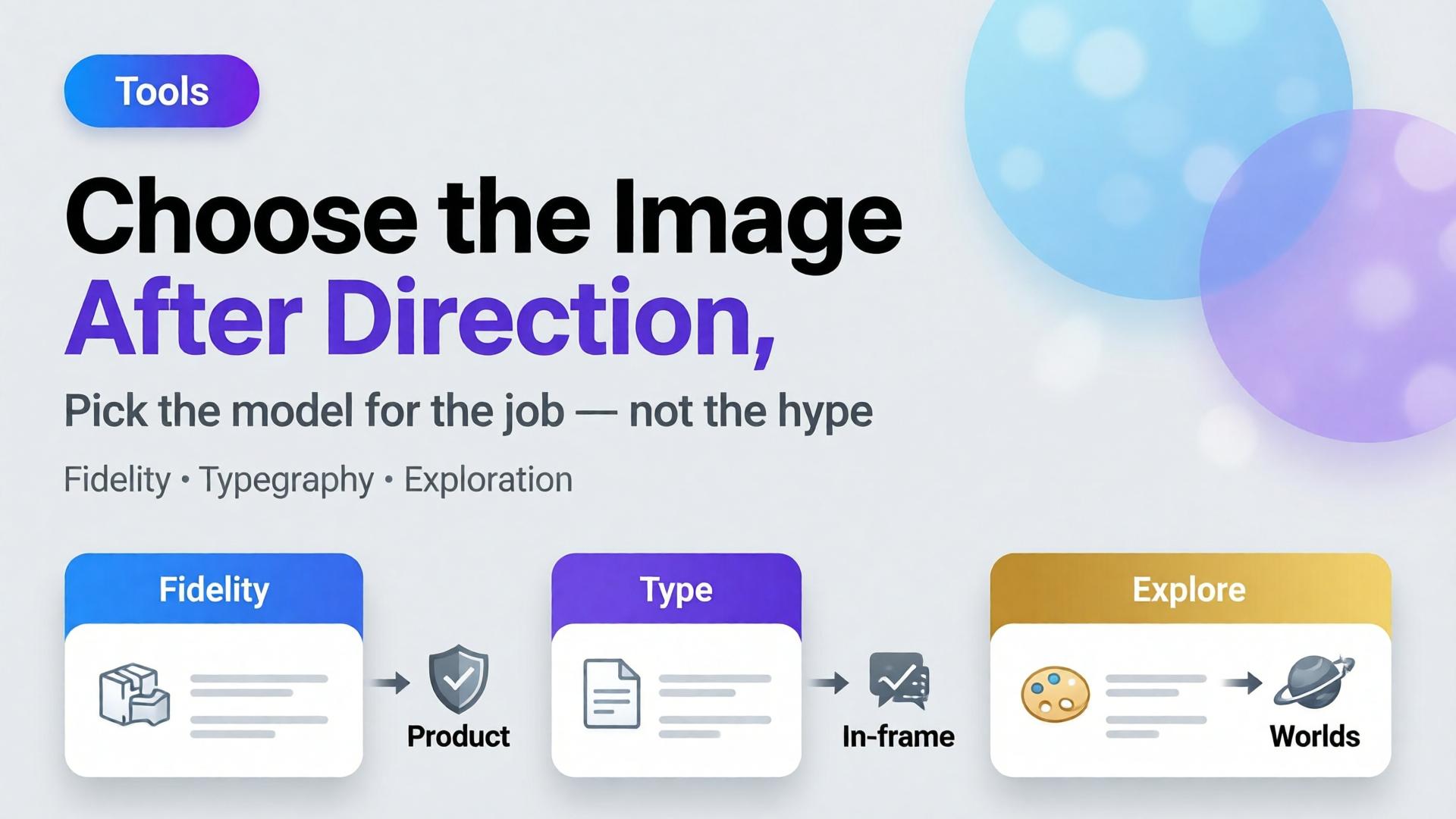
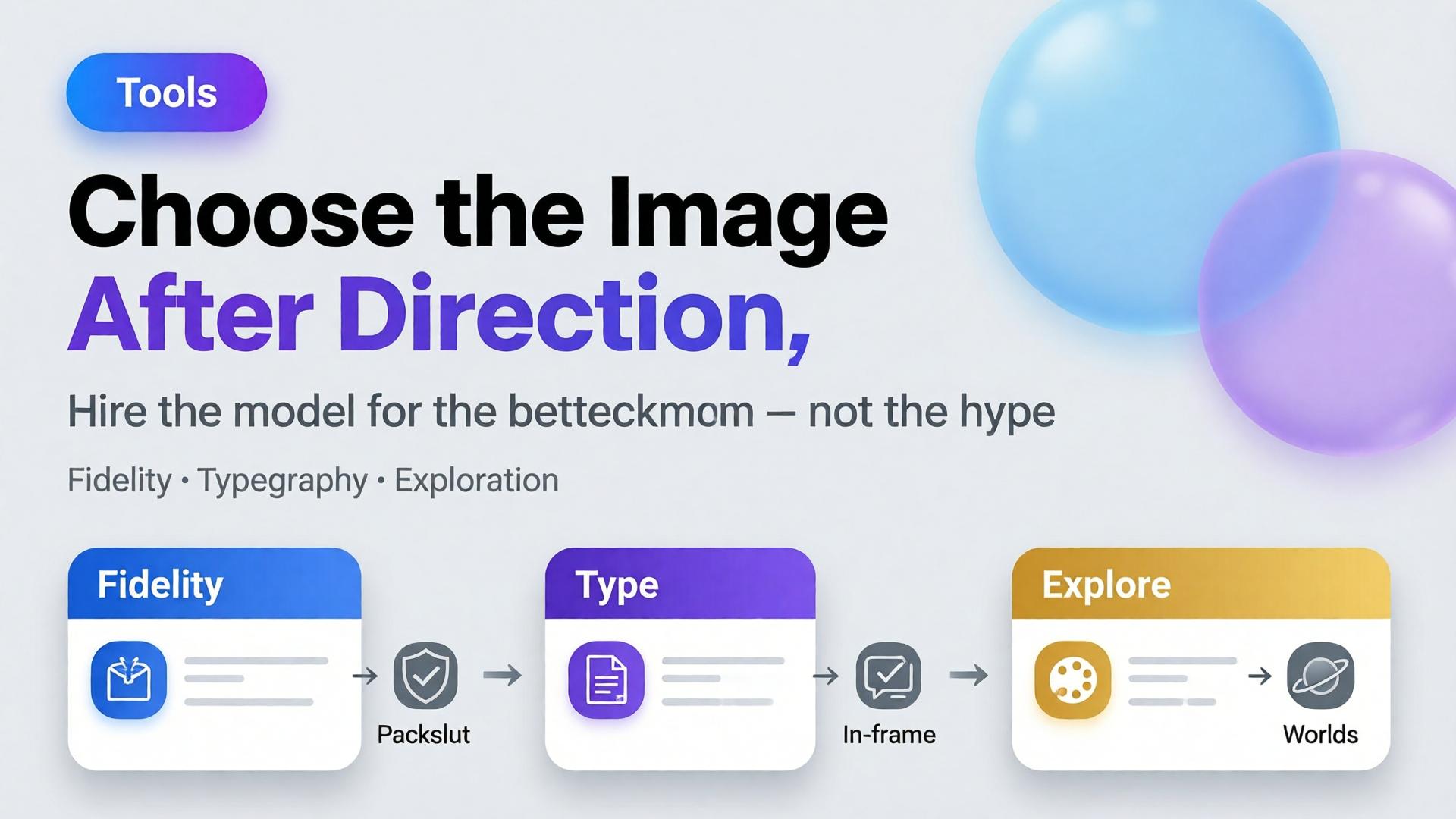
Choose the AI image model after creative direction. Model choice is a bottleneck decision — not a brand strategy.
Key Takeaways
- Models optimize different failure modes: geometry fidelity, in-frame typography, mood exploration. Pick the failure you refuse to accept.
- Adobe’s 2026 Creators’ Toolkit Report: 57% of creative AI outputs still need moderate or extensive editing — model shopping without QA criteria just moves the rework around.
- Write a 3-line creative direction, lock reference rules (reference vs explore), then select the model.
- On Orauria, those models live in one Studio with Brand Style, Prompt Library, and Workflow — so switching models does not mean switching brands.
This post is deliberately in tools-when-needed. Tools matter — after thinking. If you want the ecommerce system view, start with AI Ecommerce Design Is Not AI Image.
What Goes Wrong When You Pick the Model First?
Three predictable messes:
1. Beauty without trafficking. The export looks like a campaign. The label does not match the PDP. Media ops rejects it.
2. Prompt theater. Long prompts try to compensate for a missing angle plan. You burn credits explaining what a packshot family should have defined.
3. Stack sprawl. Each model lives in a different tab with a different login. Brand color drifts. That is the scattered-stack problem named in Orauria vs scattered AI tools.
“Best model” is not a property of the model. It is a property of the bottleneck you are hiring it to clear.
The Bottleneck Framework (Hire the Model for a Job)
| Bottleneck | You need | Model tendency to try first* |
|---|---|---|
| SKU must stay true | Pack-shot fidelity, stable proportions | Fast fidelity-oriented image models (e.g. Nano Banana-class) |
| Claim must live in pixels | Legible in-frame type, promo lockups | Typography-strong image models (e.g. GPT Image-class) |
| World must feel new | Scene variety, campaign mood, exploration | Exploratory / high-aesthetic models (e.g. Seedream-class) |
| Many ratios, one board | Consistent product block across sizes | Fidelity model + banner recompose workflow |
| Catalog scale | Repeatable prompts + Brand Style | Any solid model inside one workspace |
\*Class labels, not endorsement rankings. Re-test quarterly — model behavior moves. Your QA checklist should move slower than Twitter takes.
Before You Touch a Model: Four Locks
1. Creative direction (3 lines)
Who buys, where they see it, what emotion closes the gap. Template in The 3-Line Brief.
2. Reference policy
When to force the upload vs let the model explore — reference images vs AI explore. Packshots almost always force reference. Mood campaigns may explore after a moodboard (moodboard before render).
3. Channel job
PDP angle? Meta feed? Story? Cover? If you need all three, read feed → story → cover before generating anything.
4. QA scoreboard
Write fail conditions in advance:
- Label illegible at phone width → fail
- Cap color drift vs reference → fail
- Burned-in text required but mushy → fail (switch model class)
- Scene beautiful but wrong category world → fail (direction, not model)
A Practical Decision Path
Need in-frame promo typography?
  YES → typography-strong model (GPT Image-class)
  NO  ↓
Need listing-true geometry from a packshot?
  YES → fidelity-first model (Nano Banana-class)
  NO  ↓
Need new worlds / campaign mood from a loose brief?
  YES → exploratory model (Seedream-class)
  NO  → revisit the brief — you are underspecified
Then generate small. One SKU. One ratio. Score against the QA board. Only then batch.
How Orauria Keeps Model Choice From Becoming Brand Chaos
Orauria is an all-in-one creative workspace: multiple image models, Brand Style, Character Library, Prompt Library, and Workflow in one account (Studio Guide).
That architecture matters for this article’s thesis:
- Switch models without switching brand kits
- Store the winning prompt next to the SKU, not in a private Notion graveyard
- Hand outputs to Workflow for cutout, upscale, and marketplace crops (background removal, marketplace banners)
- Browse real creative in Gallery when you need direction inspiration before you pick an engine
You are not marrying a model. You are hiring a station on the line.
Worked Example: Electrolyte Pouch Prospecting
Direction: Gym-bag fuel; no sugar crash; sweaty-honest, not luxury spa.
Locks: White-bg packshot reference; no in-frame price; Meta 1:1 first.
Bottleneck: Product must survive phone width; hook lives in primary text.
Model hire: Fidelity-first class for the product block → then banner recompose for 4:5 and 9:16.
If marketing later demands “$30 OFF” inside the image: do not torture the fidelity model — switch to a typography-strong class for that variant only. Keep Brand Style identical so the two variants still feel related.
Frequently Asked Questions
Is Nano Banana “better” than GPT Image for ads?
Better at what? Fidelity jobs and typography jobs are different hires. Run both against your QA scoreboard for one SKU before you write policy for the whole catalog.
Should I use the same model for packshots and lifestyle?
Often yes for brand coherence; sometimes no when the lifestyle needs heavier world-building. Keep Brand Style constant either way.
How often should we revisit model choice?
When QA fail rates climb, pricing changes, or a new channel appears — not every time a launch blog post drops. Direction changes more often than engines should.
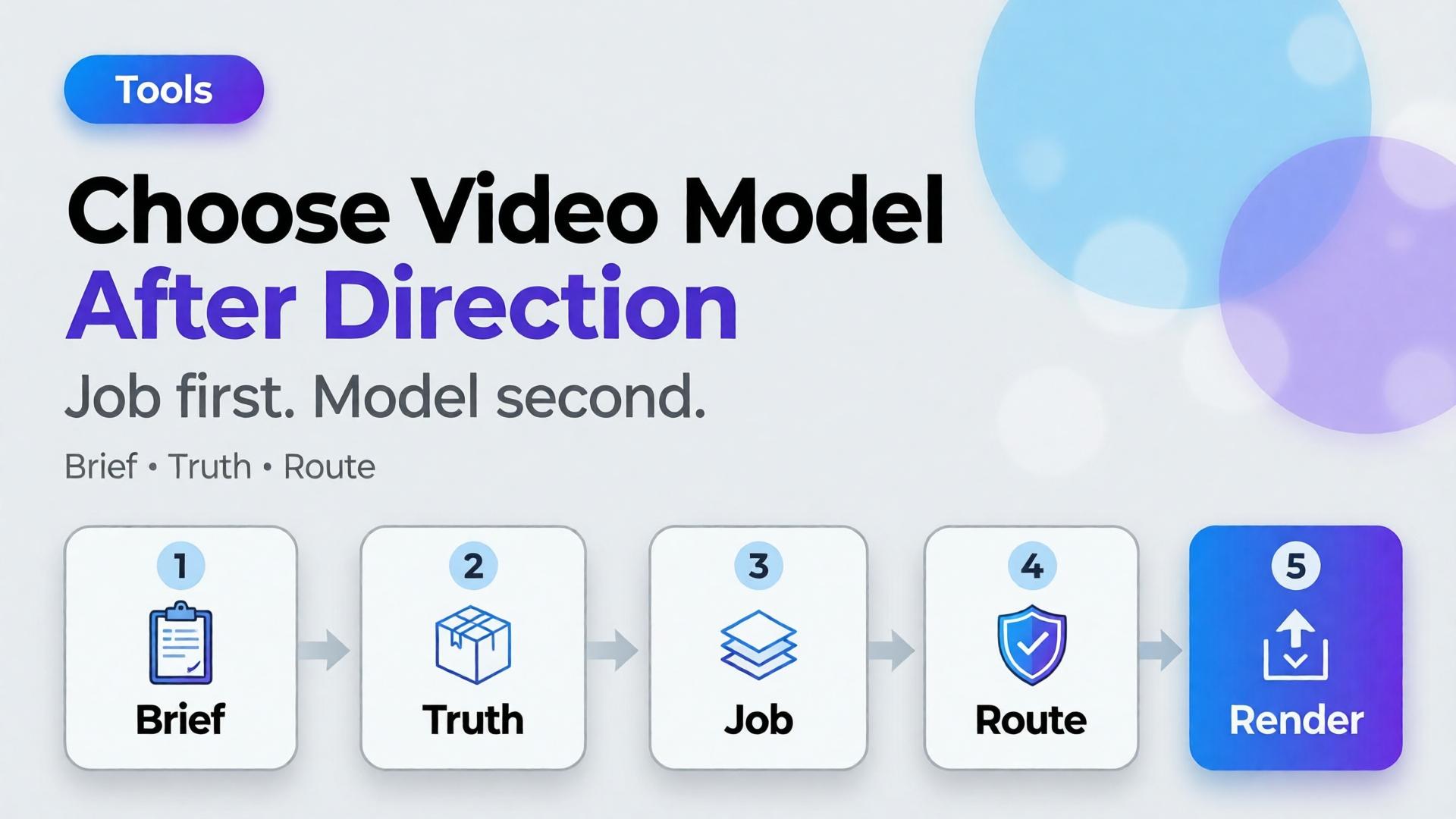
Where do video models fit (Veo, Kling, Seedance)?
Same rule: choose after direction and storyboard. Video is a later station. Static packshot + banner truth still comes first for most ecommerce tests.
Can Prompt Library replace creative direction?
No. Prompts encode a direction. They cannot invent one. Save prompts after the three-line brief exists.
Soft next step
Write the three-line brief for one SKU, define the QA fail list, then open Orauria Studio Guide and run two model classes side by side. Steal composition ideas from Gallery — then pick the engine that clears your bottleneck, not the internet’s favorite name this week.