

The 3-Line Brief: Creative Direction for AI (Not 3 Pages)
The traditional creative brief was built for committees. Background. Competitive landscape. Mandatories. Tone of voice appendix. Three pages later, the art director still asks: "So what are we actually making?"
AI did not kill the brief. It exposed which parts of the brief were theatre — and which three sentences actually steer every image downstream.
An AI creative brief does not need more words. It needs fewer, sharper decisions made before generation starts. The 3-line brief is that format: three lines, three decisions, one coherent batch.
Key Takeaways
>
> – Line 1: Who buys (persona + moment). Line 2: What world (context + light). Line 3: What feeling closes (emotion + channel job).
> – In 2026, Adobe found 85% of creators insist the final creative decision must remain theirs — a tight brief protects that judgment instead of burying it in prose (Adobe Creators' Toolkit Report, 2026).
> – Adobe's 2025 survey showed 48% use creative AI for ideation and 52% for asset generation (Adobe MAX 2025, 2025) — the 3-line brief sits before both, not inside the prompt box.
> – Expand a 3-line brief into SCENE rows only after the three lines are locked.
If you run phone-to-campaign workflows, the 3-line brief is Stage 3 in one page. If you run lookbook thinking, it is the world sentence before the eight scenes.

Why Do Three-Page Briefs Fail for AI Creative Work?
Three-page briefs optimize for alignment meetings, not generation pipelines.
| Three-page habit | What AI actually needs |
|---|---|
| Brand history essay | One buyer moment |
| Competitor matrix | One differentiated world |
| Mood adjectives ("premium, modern, fresh") | One enforceable emotion |
| Channel appendix added last | Channel named in Line 3 |
| Mandatories buried on page 2 | References uploaded separately |
When teams paste paragraph briefs into prompts, models grab random adjectives and ignore commercial intent. You get technically on-brief images that do not belong together — the brand consistency trap in brief form.
Adobe reports 57% of creators say AI outputs need moderate or extensive editing before publish (2026). Much of that editing is really brief failure disguised as retouching.

What Are the Three Lines?
Copy this template at the top of every AI creative job:
LINE 1 — BUYER: [Who + life moment in one sentence]
LINE 2 — WORLD: [Physical context + light logic in one sentence]
LINE 3 — CLOSE: [Primary emotion + channel job in one sentence]
That is the entire AI creative brief for exploration or first-pass generation. Everything else — SCENE rows, reference packs, format list — attaches after.

Line 1: Buyer (who + moment)
Not demographics alone. Moment.
- Weak: "Women 25–40 interested in skincare."
- Strong: "Urban professional, 32, pre-meeting bathroom mirror — needs to look composed in ninety seconds."
The moment tells you which scenes are plausible before you write any prompt.
Line 2: World (context + light)
Not "beautiful lifestyle." Enforceable environment.
- Weak: "Clean, premium bathroom."
- Strong: "Small apartment bathroom, soft morning window light, warm neutrals, no marble, no gold fixtures."
Line 2 is where reference vs explore splits: exploration varies Line 2 widely; scale mode locks Line 2 across every render.
Line 3: Close (emotion + channel)
Not "inspiring." One feeling + one job.
- Weak: "Aspirational and modern for social."
- Strong: "Calm confidence — hero for Instagram carousel slot 1, thumb-stop in under two seconds."
Line 3 connects brief to channel adaptation from AI ecommerce design — the image must do a commercial job, not just look good.
What Do Three-Line Briefs Look Like by Category?
Fashion — structured blazer
| Line | Content |
|---|---|
| 1 | Urban professional, 34, Monday lobby commute — wants to read capable before the meeting starts. |
| 2 | Glass office interior, late autumn, soft directional daylight, camel-cream-black palette only. |
| 3 | Composed confidence — PDP gallery image 2, lifestyle proof after studio hero. |
Expand to eight-scene experiment grid only after these three lines pass the "same film day" test.

Beauty — vitamin C serum
| Line | Content |
|---|---|
| 1 | Woman 28–38, first morning skincare step before email — wants calm control, not spa fantasy. |
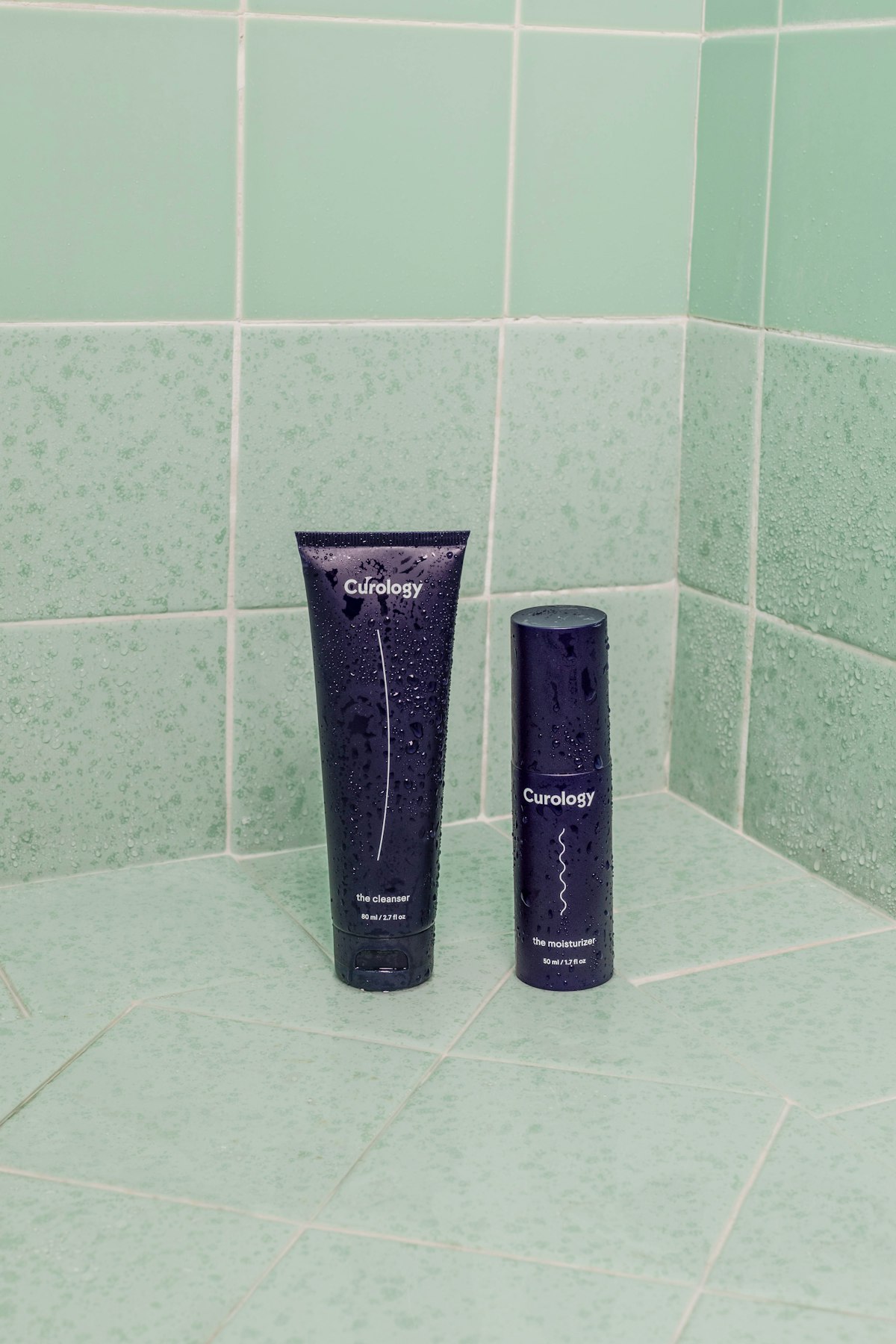
| 2 | Real bathroom shelf, indirect window light, warm tile, no luxury marble clichés. |
| 3 | Calm renewal — paid social 4:5, thumb-stop texture + ritual in one frame. |
Cross-check Line 2 against beauty context mapping so "morning ritual" is not generic stock.
FMCG — ceramic mug (SME)
| Line | Content |
|---|---|
| 1 | Remote worker, 30, afternoon desk pause — mug as small daily comfort, not gift luxury. |
| 2 | Home desk by window, overcast afternoon, muted ceramics and linen tones. |
| 3 | Unhurried warmth — email hero banner, text-safe right third empty. |
Pairs directly with phone-to-campaign capture → clean → direct flow.
How Do You Expand Three Lines Into SCENE?
The 3-line brief is the spine. SCENE is the ribs.
| 3-line element | SCENE mapping |
|---|---|
| Line 1 Buyer | Story + Context |
| Line 2 World | Context + light (Narrative setup) |
| Line 3 Close | Emotion + channel (Extension formats) |
Workflow:
- Write 3-line brief (5–10 minutes)
- Add 4–6 SCENE rows that obey Line 2 light logic
- Upload references if scaling (reference-heavy mode)
- Generate → curate → adapt per channel
Do not write SCENE tables before Line 2 is specific enough to reject a neon bathroom prompt.
When Is a 3-Line Brief Enough vs When Do You Need More?
| Situation | 3-line brief | Add SCENE grid | Add full doc |
|---|---|---|---|
| Freelancer pitch concept | ✅ | Optional | No |
| Hero SKU launch | ✅ | ✅ 4–6 rows | No |
| Enterprise rebrand | ✅ | ✅ | Legal mandatories only |
| 100-SKU catalog batch | ✅ per family | ✅ per hero | Brand kit link |
| Client needs sign-off paper | ✅ as cover | Attach SCENE | One-page PDF max |
If the client demands a three-page brief for politics, write it — then work from the three lines internally. The PDF is for the meeting; the three lines are for the pipeline.
What Are Common 3-Line Brief Mistakes?
| Mistake | Example | Fix |
|---|---|---|
| Adjective stacking | "Premium, elevated, timeless, modern" | One emotion in Line 3 only |
| Missing light | "Kitchen scene" | Add time-of-day + temperature to Line 2 |
| Channel omitted | "For Instagram" | Name slot job: hero, carousel 1, ad |
| Buyer too broad | "Gen Z consumers" | One moment, one mirror, one commute |
| Skipping curator | Brief written by whoever generates | Separate explorer from approver |
How Does the 3-Line Brief Fit Freelancer Workflow?
Freelancers win when the deliverable is direction + system, not a folder of files.
Suggested client-facing flow:
- Kickoff: agree 3-line brief (15 minutes)
- Exploration: 2–3 world options obeying Line 1 only
- Lock: client picks world → Lines 2–3 finalized
- Production: SCENE grid + references + curated set
- Handoff: 3–5 images + saved workflow template
Next step in the series: One Workflow Template for Five Clients. Infrastructure deep-dive: Node Thinking (coming soon).
Write and run 3-line briefs on Orauria: Try Orauria
Frequently Asked Questions
Is a 3-line brief too short for serious brands?
No. Serious brands need clear decisions, not long documents. Enterprise teams can attach mandatories separately; the three lines still drive generation.
Can I paste the three lines directly into an AI prompt?
Use them as the header block above scene-specific prompts — not as the entire prompt. Lines 2–3 should repeat in every scene brief for consistency.
How is this different from SCENE?
SCENE is a per-scene framework (five dimensions). The 3-line brief is project-level — one spine for the whole job. Write three lines first, then SCENE rows.
What if the client changes direction mid-project?
Change Lines 2 or 3 explicitly and regenerate affected scenes only. Do not tweak prompts randomly — that is how consistency traps start.
Should freelancers charge for brief development?
Yes. Briefing is creative direction. Many freelancers underprice generation and overgive strategy; the 3-line brief is a billable discovery deliverable.
Does this work for non-visual AI (copy, video)?
Yes. Line 1–3 map to audience, setting/tone, and desired response — video teams add motion rules; copy teams add voice — same spine.
Conclusion
AI does not need a three-page brief. It needs three decisions: who, world, close.
Write those lines before opening any model. Expand into SCENE only after they hold. Reference when scaling, explore when discovering, curate before publish.
The brief is not documentation. It is steering — and three lines are enough if they are specific enough.
References
- Adobe, 2026 Creators' Toolkit Report, June 16, 2026. https://news.adobe.com/news/2026/06/creators-toolkit-report-2026
- Adobe, Inaugural Creators' Toolkit Report (Adobe MAX 2025), October 28, 2025. https://news.adobe.com/news/2025/10/adobe-max-2025-creators-survey
- 9to5Mac, "Adobe survey: AI is helping creators grow, but not without tradeoffs," June 16, 2026. https://9to5mac.com/2026/06/16/adobe-survey-ai-is-helping-creators-grow-but-not-without-tradeoffs/